
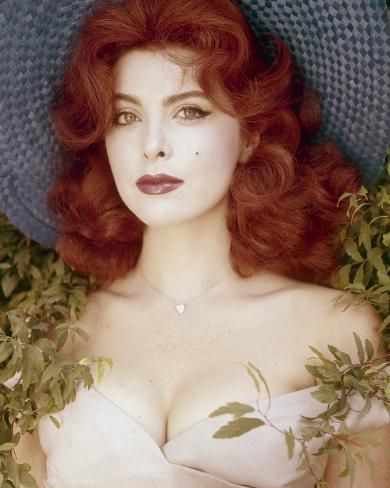
In the swinging 1960s, when television was rapidly becoming the centerpiece of American households, one fiery redhead stepped onto the screen and captured the nation’s imagination. Tina Louise, with her striking beauty and undeniable charisma, became an instant sensation — not just for her glamorous looks, but for the wit and nuance she brought to her most famous role. On this day in 1964, audiences first set sail with the castaways of Gilligan’s Island, and Louise’s portrayal of Ginger Grant, the dazzling movie star stranded on a deserted island, quickly became one of the show’s most iconic elements.
Born Tina Blacker in New York City in 1934, Louise grew up with dreams that stretched far beyond the boroughs. She studied at the Neighborhood Playhouse School of the Theatre under Sanford Meisner, one of the most respected acting teachers of the 20th century. With natural talent and sharp determination, she built her career step by step, beginning in Broadway musicals before transitioning to film and television. By the late 1950s, she had already earned attention in Hollywood with her role in the Robert Taylor film God’s Little Acre (1958), which won her the Golden Globe Award for “New Star of the Year.”
But it was Gilligan’s Island that would forever define her public persona. As Ginger Grant, Louise played the archetypal “movie star,” a glamorous diva accustomed to luxury, now stranded with a group of mismatched castaways. Dressed in sequined gowns and armed with a sultry voice, Ginger was both comedic and alluring — a character that showcased Louise’s ability to balance humor with sophistication. While the show itself was dismissed by critics as broad slapstick, audiences loved it. Week after week, millions tuned in to watch the antics of Gilligan, the Skipper, and their fellow castaways, and Ginger became a cultural touchstone, embodying the glitz and glamour of Hollywood even in the most absurd circumstances.
Despite the popularity of the show, Louise herself had a complicated relationship with it. She often expressed concern that the role typecast her, limiting the more serious acting opportunities she had been pursuing. In interviews over the years, she admitted that while the show brought her fame, it also became something of a double-edged sword. Still, fans adored her, and Ginger Grant remains one of the most memorable television characters of the 1960s.
Outside of Gilligan’s Island, Tina Louise continued to work steadily, though often in projects that struggled to match the same level of cultural impact. She appeared in films such as The Happy Ending (1969) and The Stepford Wives (1975), demonstrating her range beyond comedy. She also made numerous guest appearances on popular television shows throughout the 1970s and 1980s, including Kojak and Dallas. Her performances reminded audiences that she was more than just Ginger — she was a versatile actress capable of playing a wide spectrum of roles.
Louise also pursued a passion for music and writing. In the 1950s, she released an album titled It’s Time for Tina, which showcased her sultry singing voice and cemented her status as a multi-talented entertainer. Later, she authored children’s books, including When I Grow Up and What Does a Bee Do?, showing her desire to create something meaningful for younger generations. Her transition from glamorous television star to thoughtful author underscored her depth and adaptability.
Her personal life, like many Hollywood stars, included its share of challenges and reinventions. She married radio announcer Les Crane in 1966, and the couple had a daughter, Caprice Crane, who went on to become a successful novelist and screenwriter. The marriage ended in divorce, but Louise focused much of her energy on raising her daughter, balancing her career with motherhood.
May you like
Kim Novak’s quietly stunning performance in The Eddy Duchin Story (1956) wasn’t just beautiful—it was unforgettable.
Before she was a Dame, she was nearly banned. What did Helen Mirren do on stage that made politicians furious?
She stepped onto the screen with a scream in 1976’s King Kong—but no one expected the blonde beauty to become one of Hollywood’s most formidable dramatic powerhouses
As the decades passed, Tina Louise gradually stepped away from the spotlight, though she never disappeared from the public’s affection. She has attended fan conventions, given interviews reflecting on her career, and shared her thoughts on aging gracefully and living with purpose. When asked about Gilligan’s Island in recent years, she has been candid, acknowledging both the frustrations and the enduring joy it brought to audiences.
Today, at 90 years old, Tina Louise stands as the last surviving main cast member of Gilligan’s Island. This fact alone lends a poignant weight to her legacy. She represents not only the enduring charm of a beloved show but also the resilience of a woman who navigated Hollywood on her own terms. The fiery redhead who once lit up television screens continues to inspire admiration, both for her performances and for the life she built beyond them.
As we look back on that fateful premiere in September 1964, when seven stranded castaways first beamed into living rooms across America, it’s impossible not to think of Ginger Grant — radiant, funny, and unforgettable. And while Tina Louise may have resisted the role’s grip on her career, she gave audiences a character who remains etched into pop culture history.
Tina Louise’s story is one of talent, beauty, and endurance. She may have set sail as a movie star marooned on a desert island, but she emerged as something much more enduring: a symbol of an era, a testament to the golden age of television, and a reminder that sometimes the roles we resist become the very ones that ensure our immortality.
Before she became a ’70s screen icon, Jacqueline Bisset stunned audiences with a breakout role that changed everything—what happened on set with Steve McQueen still sparks conversations today…
Jacqueline Bisset, born on September 13, 1944, in Weybridge, Surrey, England, rose to international fame with a blend of refined elegance, natural grace, and undeniable acting talent. With her striking beauty and nuanced performances, she became one of the most admired actresses of her generation, carving a career that balanced Hollywood stardom with a strong presence in European art cinema.