
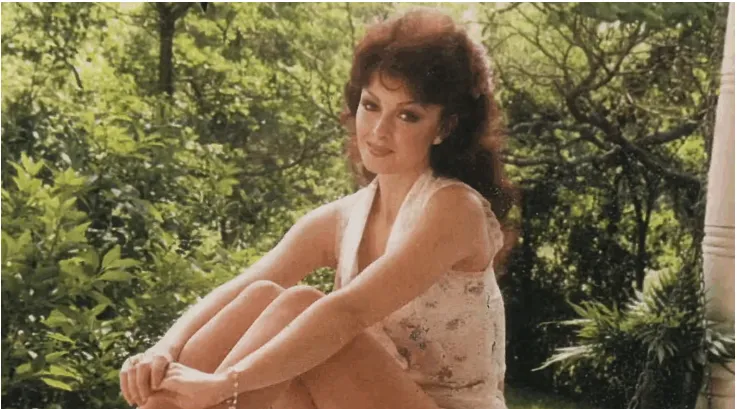
Born on this day in 1946, a young woman entered the world in Ashland, Kentucky, with little to suggest that her life would one day inspire millions. Naomi Judd, born Diana Ellen Judd, grew up in modest circumstances, the daughter of a gas station owner and a homemaker. Her story, however, would become one of resilience, talent, and fortitude, transforming her from a small-town girl into one of the most celebrated figures in American country music.
Naomi’s early years were defined by struggle as much as by dreams. She became a mother at a young age, raising her daughters Wynonna and Ashley largely on her own after her marriage ended. Life was anything but glamorous — she worked as a nurse to support her family, often balancing long shifts with the responsibilities of parenthood. Yet, through the hardship, she found solace and strength in music. Singing was not only an escape but also a way to communicate the emotions she often carried quietly.
The turning point came in the late 1970s, when Naomi and her eldest daughter Wynonna began singing together. What started as harmonies around the house soon blossomed into something undeniable. Their voices blended in a way that was almost mystical — Wynonna’s rich, powerful contralto paired with Naomi’s warm, steady alto created a sound that stood out in Nashville. By the early 1980s, “The Judds” were born, and country music would never be the same.
The mother-daughter duo quickly rose to prominence. Signed to RCA Records in 1983, they delivered hit after hit, including Mama He’s Crazy, Why Not Me, and Grandpa (Tell Me ’Bout the Good Old Days). Their songs weren’t just catchy melodies — they told stories, weaving themes of love, family, heartache, and resilience. Audiences connected deeply with their authenticity. The Judds embodied the spirit of traditional country while also bringing a modern polish that resonated with mainstream audiences.
Their success was meteoric. Over the course of their career as a duo, Naomi and Wynonna earned five Grammy Awards, nine Country Music Association Awards, and sold more than 20 million records. They became one of the most successful acts in country music history, with a string of 14 number-one hits that defined the genre during the 1980s. But beyond the accolades and record sales, what made The Judds remarkable was their bond. They weren’t just performers; they were family, and that intimacy shone through in every performance.
Yet, behind the glamour of their career, Naomi faced profound challenges. In 1991, at the height of their success, she was forced to retire from performing after being diagnosed with hepatitis C, a potentially life-threatening illness. Doctors warned her that she might have only a few years to live. For Naomi, it was a devastating blow — not only to her career but also to the life she had worked so hard to build.
But true to her resilient spirit, Naomi refused to be defeated. She devoted herself to her health, becoming an advocate for hepatitis C awareness and treatment. Her battle with the disease, and her eventual recovery, was a testament to her strength and determination. She wrote books, including memoirs that candidly detailed her struggles with illness, depression, and the pressures of fame. In sharing her vulnerabilities, she gave voice to millions who faced their own battles, proving that even in hardship, there can be healing and hope.
While Wynonna went on to a successful solo career, Naomi remained a guiding force in her daughters’ lives. Her youngest, Ashley Judd, became a celebrated actress, and together, the Judd women became a symbol of strength, family, and perseverance. Naomi often spoke about the importance of roots, values, and resilience, reminding audiences that her Southern upbringing had shaped the woman she became.
May you like
Kim Novak’s quietly stunning performance in The Eddy Duchin Story (1956) wasn’t just beautiful—it was unforgettable.
Before she was a Dame, she was nearly banned. What did Helen Mirren do on stage that made politicians furious?
She stepped onto the screen with a scream in 1976’s King Kong—but no one expected the blonde beauty to become one of Hollywood’s most formidable dramatic powerhouses
The Judds reunited for occasional tours and performances, each one a reminder of their enduring magic. In 2021, it was announced that The Judds would be inducted into the Country Music Hall of Fame, cementing their place among the legends of the genre. For Naomi, it was a recognition of not only her musical achievements but also of the journey that had brought her from a gas station in Kentucky to the pinnacle of country music.
Naomi Judd’s story resonates because it is not simply one of fame and fortune, but of trials and triumphs woven together. She was a woman who faced personal hardship, illness, and public scrutiny, yet never lost sight of the values that anchored her: family, honesty, and resilience. Her music continues to speak to new generations, carrying forward the stories she and Wynonna sang with such passion and truth.
On what would be her 1946-born milestone, Naomi Judd is remembered as more than a singer. She was a storyteller, a fighter, and an emblem of Southern grit and grace. From humble beginnings to international acclaim, her legacy remains a beacon of hope and strength — proof that even the hardest journeys can give rise to the most extraordinary songs.
She was Hollywood’s golden girl—but what was she really thinking in this quiet moment at sea?
In the golden age of Hollywood, when the silver screen glimmered with icons whose beauty seemed almost untouchable, true vulnerability was seldom seen — and even less often preserved. The stars of that era were crafted into ideals: immaculate in public, flawless in photographs, and carefully groomed to uphold the fantasy of glamour. But in 1955, a single candid image of Natalie Wood quietly challenged that myth. Far from the studio lights and publicity machines, it revealed a teenager caught in a rare and fleeting moment of peace, straddling the line between youth and stardom.